Unfiled Tax Returns: How Far Back Can the IRS Really Go?
If you haven't filed your tax returns in a while whether it's been one year or ten, there's a good chance you've already asked yourself this question. And if you have, the answer is probably not what you want to hear.
The short version: the IRS can go back indefinitely for unfiled returns. But understanding how this actually works in practice can make the situation far less overwhelming than it sounds.
The Myth vs. the Reality
Most people assume the IRS has a limited window to come after them. And in some cases, that's true but not when returns are unfiled.
Here's why: the IRS statute of limitations on tax assessment only starts running once a return has been filed. If you never file, that clock never starts. This means the IRS has no legal deadline to assess and collect taxes on years you've skipped.
In other words, unfiled tax returns don't expire. They don't age out. And they don't quietly go away.
So Why Does Everyone Say "Six Years"?
Because that's what the IRS typically enforces and there's a reason for it.
Per IRS Policy Statement 5-133, the agency generally only requires taxpayers to file the last six years of returns to be considered back in compliance. This is the standard the IRS applies when bringing someone current.
So if you haven't filed in 10, 15, or even 20 years, the IRS will often ask for just the most recent six years of returns. That's not a guarantee, though. It's a guideline not a law. The IRS can and does go further back if they have reason to, particularly in cases involving significant unreported income, suspected fraud, or large amounts owed.
What Happens If You Don't File
Every year you skip filing, the situation compounds literally. Here's how it builds:
Year One: The IRS assesses a failure-to-file penalty of 5% of unpaid tax per month, up to a maximum of 25%. Interest begins accruing on top of that immediately.
Year Two: A second round of penalties starts on the new unfiled return. Your history of non-compliance also makes it harder to qualify for penalty abatement one of the key relief options available to taxpayers.
Year Three and Beyond: Both sets of penalties have now compounded significantly. The balance you owe is likely far larger than your original tax liability. And your risk of IRS enforcement including substitute returns, levies, and liens grows with each passing year.
The longer you wait, the fewer options you have and the more you owe.
What Is a Substitute for Return?
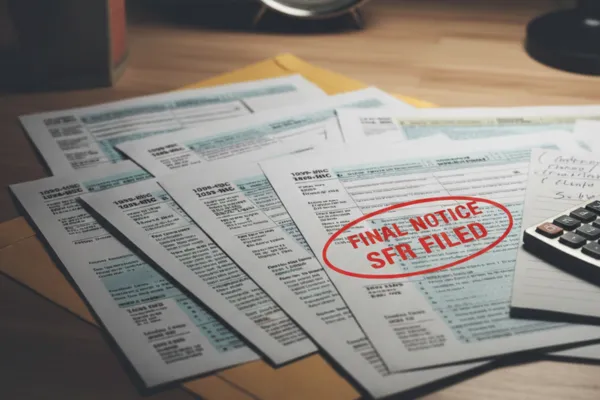
If the IRS decides to act on an unfiled year, one of the first things they may do is file a Substitute for Return (SFR) on your behalf.
An SFR is based solely on income the IRS already has on record typically from W-2s and 1099s reported by your employer or clients. The problem? An SFR does not account for any deductions, credits, or expenses you may be entitled to. This often results in a tax bill that is significantly higher than what you would actually owe if you filed yourself.
Once an SFR is in place, you can still file an original return for that year to correct it but the process becomes more involved and the scrutiny increases.
How the IRS Finds Out You Haven't Filed
Many people believe they can fly under the radar if they simply don't file. This is one of the most dangerous assumptions a taxpayer can make.
The IRS receives income information directly from third parties employers, clients, financial institutions, and others through forms like W-2s, 1099s, and Schedule K-1s. The agency systemically compares this reported income against your filing history. If enough income was reported to trigger a filing requirement and no return was filed, the IRS knows.
You don't need to tip them off. They already have the information.
The Good News: You Can Still Get Back Into Compliance
Even if you've been behind for years, catching up is possible and it's far better than waiting for the IRS to act first. Here's what the process generally looks like:
File voluntarily before the IRS contacts you. This builds goodwill and gives you more control over the process. It also opens up more resolution options than responding reactively to an IRS notice.
Start with the last six years. In most cases, this is all the IRS requires to consider you compliant. A tax professional can help you determine exactly which years need to be filed based on your specific situatio
Gather what you can but don't let missing documents stop you. You can request tax transcripts directly from the IRS through your online account or by filing Form 4506-T. A professional can help you reconstruct returns using the information available.
Explore relief options. Depending on your situation, you may qualify for penalty abatement, an installment agreement, an Offer in Compromise, or currently not collectible status. These options exist specifically for taxpayers who are trying to get back into good standing.
Why Acting Now Matters More Than You Think
There's a common instinct to put this off to wait until things are more stable financially, or until the IRS reaches out first. Both of these approaches carry real risk.
Every month you delay, penalties and interest continue to grow. Your exposure to enforcement actions increases. And your ability to negotiate favorable resolution terms decreases.
Filing before the IRS comes after you is almost always the better path. It keeps you in control of the timeline, reduces the chance of a Substitute for Return, and preserves your access to relief programs.
Don't Navigate This Alone
Catching up on multiple years of unfiled returns is not something you need to figure out on your own. A licensed tax professional can assess exactly how many years need to be filed, identify the deductions and credits you're owed, communicate with the IRS on your behalf, and build a resolution strategy that fits your financial reality.
This isn't about fighting the IRS. It's about getting back into compliance the right way — before the situation gets harder to resolve.
Free Resource: IRS Notice Cheat Sheet
If you've received IRS notices about unfiled returns or you're not sure what the IRS knows about your filing history start by understanding exactly where you stand.
Our free IRS Notice Cheat Sheet breaks down what the IRS is actually saying, how serious your situation is, which deadlines matter most, and what to do next in plain language, no legal jargon.
👉 Get the IRS Notice Cheat Sheet for free
Ready to Get This Resolved?
If you have unfiled tax returns whether it's been one year or fifteen a short conversation can give you a clear picture of where you stand and what your options are.
📞 Book your free consultation today
No obligation. No pressure. Just clarity and a plan to move forward.


